Heiner Müller
Name: Heiner Muller
Contribution: Playwright; Writer
Year of birth: 1929
Year of death: 1995
Place of birth: Saxony, Germany; Germany; Europe
Place of death: Berlin, Germany; Germany; Europe
Nationality: Germany
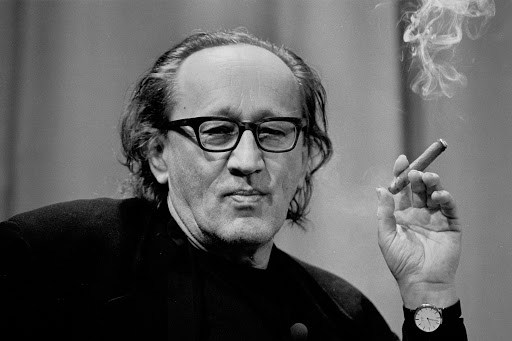
German playwright and director. Müller's plays mix Brechtian, Artaudian, and postmodern techniques, and a vast range of reference to European literature, in blood-drenched collages of the catastrophes of European Enlightenment in general and German history in particular. Yet as his characteristically grim aphorism— ‘I am an optimist: I believe in the Fourth World War’—suggests, he extracted a utopian dialectic from these images of humanity's interlocking drives to self-destruction and survival. In the 1950s and early 1960s, plays such as Der Bau (Construction, 1964) subverted the heroics of socialist realism with critical images of the German Democratic Republic's troubled transition from capitalism to socialism. Their production, when permitted at all, brought Müller repeated difficulties, such as exclusion from the national writers' organization in 1961; and his less direct criticism of the state through adaptations of Greek classics and Shakespeare in the 1960s and 1970s did not protect his Macbeth (1972) from accusations of pessimism and escapism.
From the 1970s on Müller radically intensified his representations of conflict, rejecting linear progress and the self-determining subject and exploding character and the unities. In Germania Tod in Berlin (Germania Death in Berlin, 1978), Die Schlacht (The Battle, 1975), or Germania 3 (1995), brutal yet grotesquely comic images of betrayal, dismemberment, or cannibalism link the GDR with the disasters of German history. Parallel scenes stress fateful links: between Hitler and Stalin, or the communist worker and his fascist brother. Other plays such as Verkommenes Ufer, Medeamaterial, and Landschaft mit Argonauten (Desolate Shore, Medea Material, and Landscape with Argonauts, all 1983) link patriarchy and colonialism in a radical indictment of the European legacy. Both in form and content, Hamletmachine (1978) dismantles the Enlightenment individual, paralleling the artistic subject as moulder of his material and the machine as symbol of dominance over nature. Meanwhile, in the ‘ruins of Europe’ Ophelia's resistance to gender determination generates revolutionary energy. (Because of censorship difficulties, the production dates listed often differ substantially from the dates of composition.)
Müller's texts are often monologic; the drama of interacting subjects, whether bourgeois or proletarian, cannot express his vision of history's horrors. Thus non-verbal images are central; Müller admired the performance work of Robert Wilson (with whom he cooperated on a production of Hamletmachine in 1986) and the dance-theatre of Pina Bausch. For Müller, aesthetic value emerged only from conflict, between text and production, or production and audience. His plays challenge the production process through unrealizable stage directions or blocks of unattributed dialogue.
His directing work also sought to provoke, not elucidate. He avoided psychological realism, favouring montage, clownish exaggeration, fluid intertextuality, and often grandiose visual symbolism (as in his production of Wagner's Tristan and Isolde at Bayreuth, 1993). His Hamlet, whose conception, rehearsal, and première in 1990 accompanied the GDR's rapid disintegration, dismembered and reassembled both Shakespeare's play and Müller's own Hamletmachine. The result was an eight-hour necrology for the decayed and doomed East German state but also for Müller's own work as subversive art. With designer Erich Wonder, Müller staged a complex visual metaphor for the state's collapse: grey gauze, cold lighting, and a vast block of ice became, by the time the golden-headed, business-suited Fortinbras arrived, a parched desert: a characteristic example of Müller's allusive, unresolved juxtapositions of political allegory and epochal symbolism.
McGowan, Moray. "Müller, Heiner." The Oxford Encyclopedia of Theatre and Performance. : Oxford University Press, 2003. Oxford Reference. 2005. Date Accessed 9 Nov. 2016 <http://0-www.oxfordreference.com.mercury.concordia.ca/view/10.1093/acref/9780198601746.001.0001/acref-9780198601746-e-2749>.